
Online community management best practices are the habits that keep a community active, useful, and able to run without its founder: a clear purpose, easy onboarding, consistent moderation, meaningful measurement, shared ownership, and a path for members to grow. The right practice depends on what your community is struggling with right now, so this guide is organized by symptom.
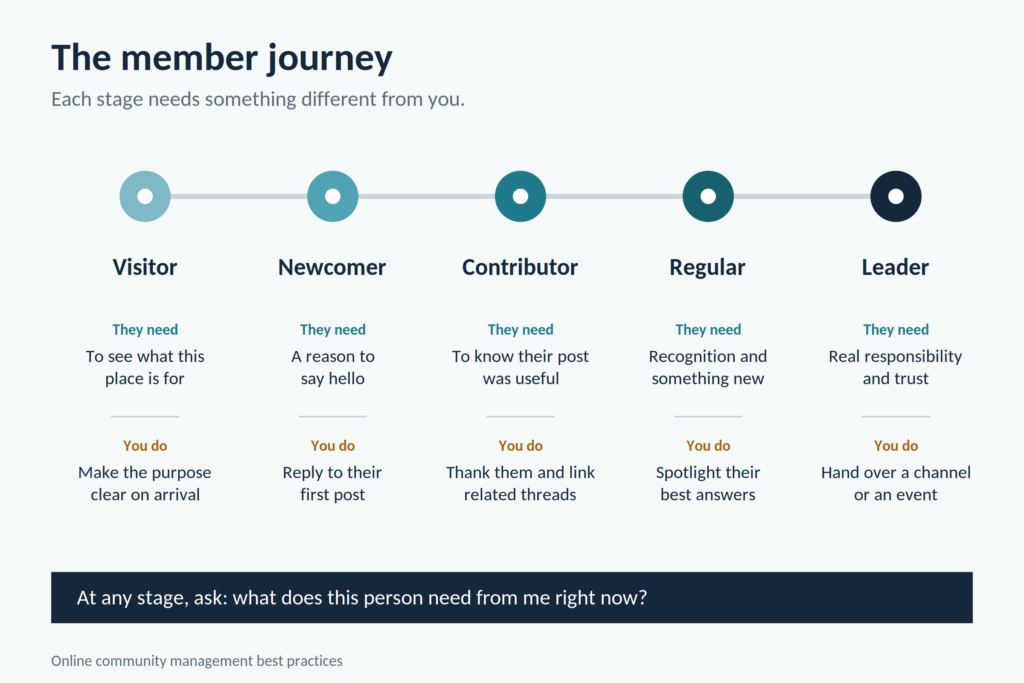
The sections below explain when each one matters and how to start.
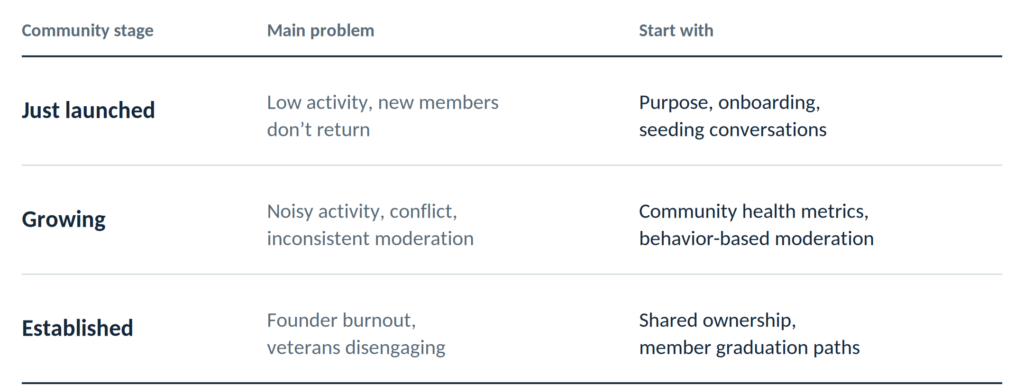
Match it to your community’s stage:
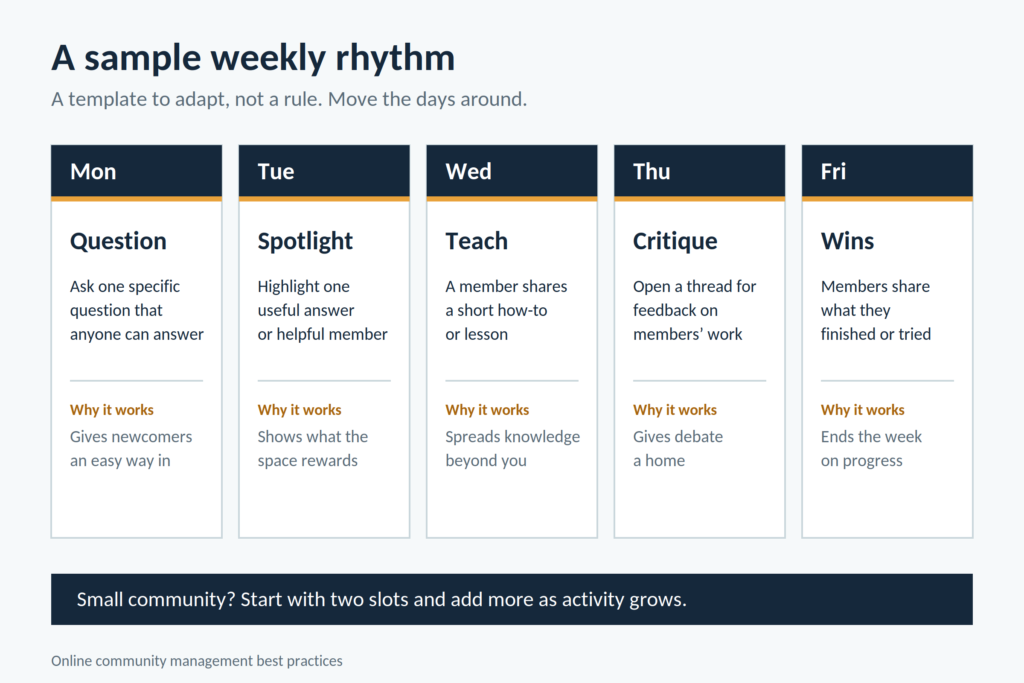
Short answer: Members usually don’t know what the space is for, or starting a conversation feels risky.
Caution: In a community of a few dozen people, silence usually means the room isn’t warm yet, not that people are thinking deeply.
Short answer: Give every newcomer one clear first action and a real person who responds to it.
Short answer: Track whether the activity is useful, not just whether it exists.
Engagement metrics like posts and daily active users also count arguments, spam, and outrage. Keep your dashboard as a smoke alarm, and add community health metrics you answer by reading:
If a recurring prompt gets replies but never produces value, retire it.
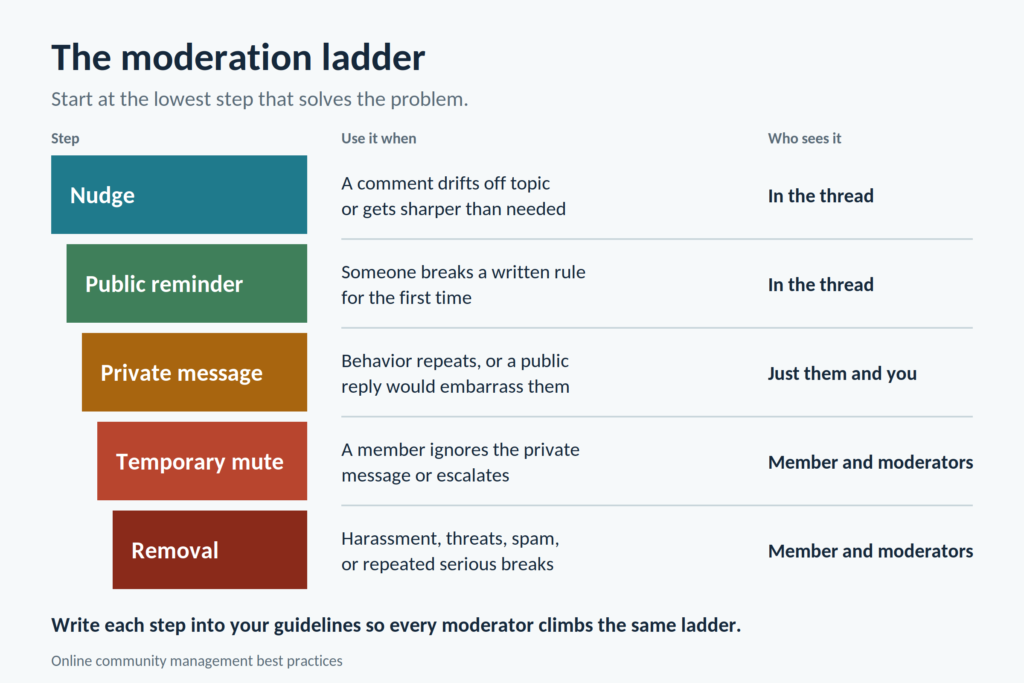
Short answer: Moderate what a comment is doing, not how it sounds.
Tone is subjective, which leads to inconsistent community moderation. Behavior is observable.
To keep moderators aligned:
Caution: Over-sanitizing makes a community flat. People who want to be challenged will leave.
Short answer: Hand members real responsibilities, starting small.
Caution: Delegating before members understand the culture can backfire. Hand responsibilities to people who’ve shown they get it.
Short answer: Give them a next step, and treat their graduation as a success.
Run this every quarter:
Can a new visitor tell who this community is for in one sentence?
Do newcomers get a human reply to their first post?
Is the activity useful, not just frequent?
Do all moderators handle the same behavior the same way?
Could the community run for a week without me?
Do my most experienced members have somewhere to grow?
A “no” to any item tells you which section to revisit.
What is online community management?
It’s the work of guiding an online group so members can connect, share, and get value from each other. It covers onboarding, moderation, content, measurement, and leadership.
How often should I post in my online community?
It depends on size. A small community needs frequent seeding and fast replies. A larger one needs less of your input and more member-led conversation.
What is the difference between engagement and community health?
Engagement counts activity. Community health asks whether that activity is useful, respectful, and self-sustaining.
How many moderators does a community need?
Enough that decisions stay consistent and no single person is a bottleneck. Start with a small group, and document your rules and examples.
Should I try to grow my community as large as possible?
Not necessarily. A smaller community with strong answers and active members often delivers more value than a large, noisy one.