
Traditional sales channels are bleeding efficiency, making a B2B dark social community the new core engine for growth. As top-of-funnel ad costs rise and buyers develop “content blindness” toward generic inbound whitepapers, purchasing power has migrated entirely into untracked, high-trust channels.
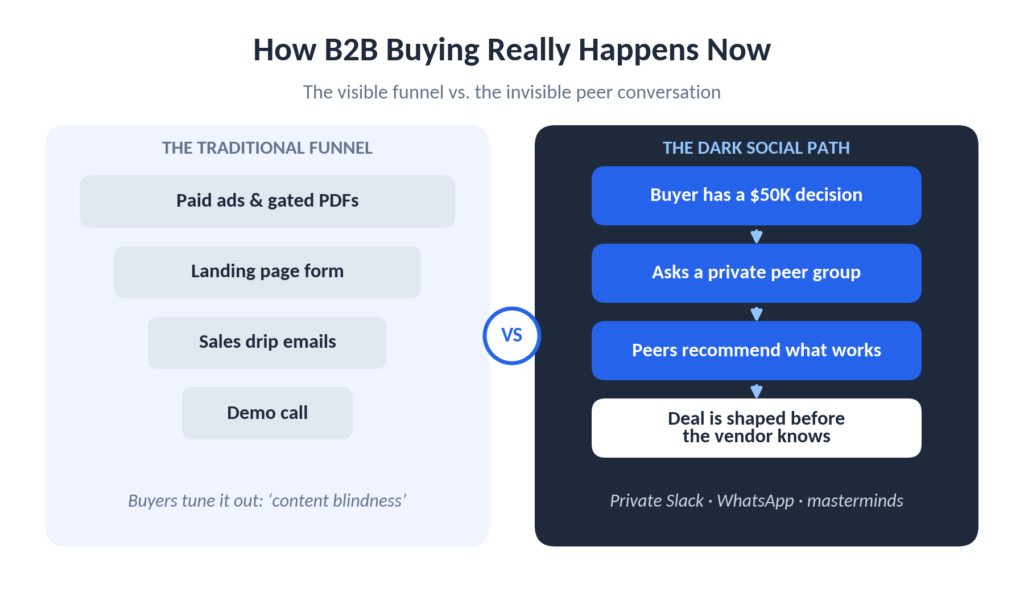
Modern B2B decision-makers no longer fill out landing page forms or wait for sales drip emails. Instead, when a $50,000 software or agency decision is on the line, they ask trusted peers inside private Slack groups, founder masterminds, and invite-only WhatsApp circles. For growth leaders, community has evolved from a soft ‘engagement initiative’ into critical revenue retention infrastructure.
The Shift to Dark Social in Numbers
Dark Social refers to invisible word-of-mouth chatter occurring inside private digital spaces that traditional web analytics cannot track. This includes encrypted messaging apps (WhatsApp, Telegram), private Slack or Discord communities, direct messages (DMs), and closed executive roundtables.
The traditional inbound marketing stack running paid LinkedIn ads to drive traffic to gated PDF e-books worked well when information was scarce. Today, generative AI has flooded search engines and social feeds with automated, generic content slop. Because buyers are overwhelmed by noise, corporate whitepapers have lost their authority.
When a buyer needs a genuine solution, they don’t Google ‘Best HR Software 2026.’ They drop a line into an invite-only peer group: “We’re scaling to 100 people and our stack is breaking what are you actually using that works?” The responses they get in that thread close deals before a vendor’s sales rep even knows an opportunity exists.
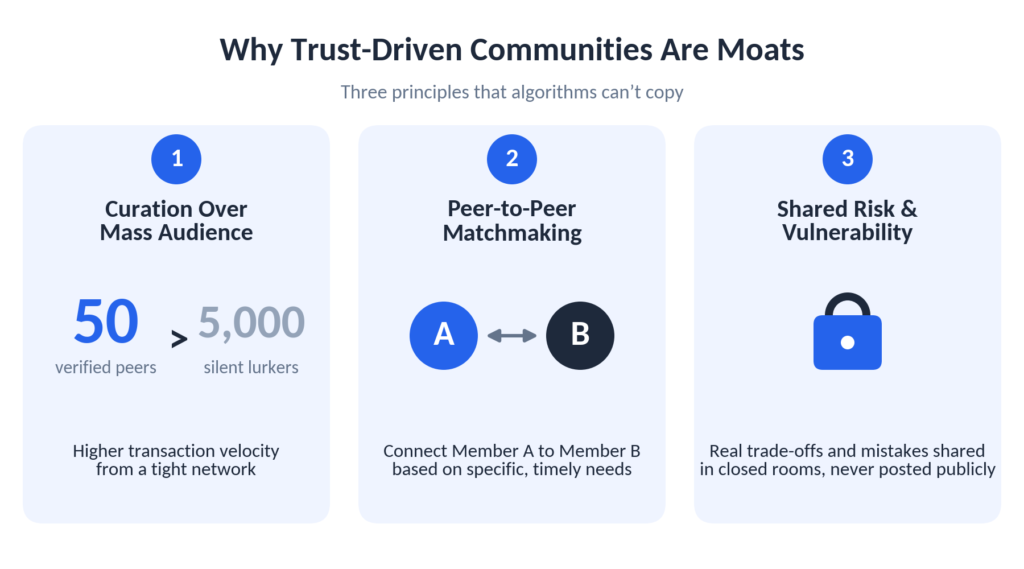
Private communities act as defensible business moats because human context, shared risk, and peer validation cannot be replicated by automated algorithms. When every company can generate 50 SEO articles a day using artificial intelligence, content ceases to be a competitive advantage. Human trust becomes the ultimate premium commodity.
High-value communities win by focusing on three key operational principles:
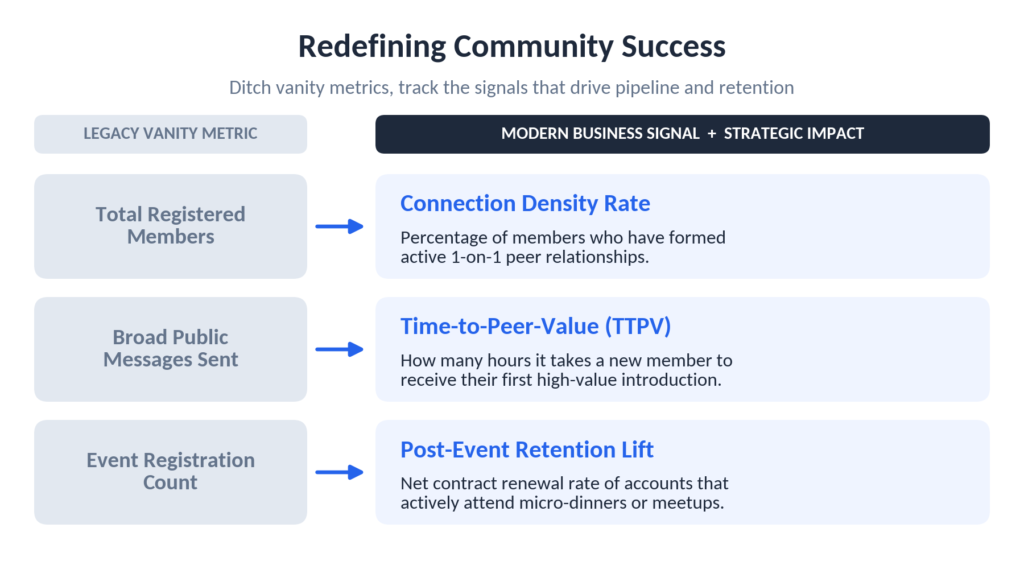
Measuring community success through ‘total member count’ or ‘messages sent’ is misleading and masks underlying community decay. Modern ecosystem leads track high-signal metrics that directly correlate with pipeline velocity and customer retention.
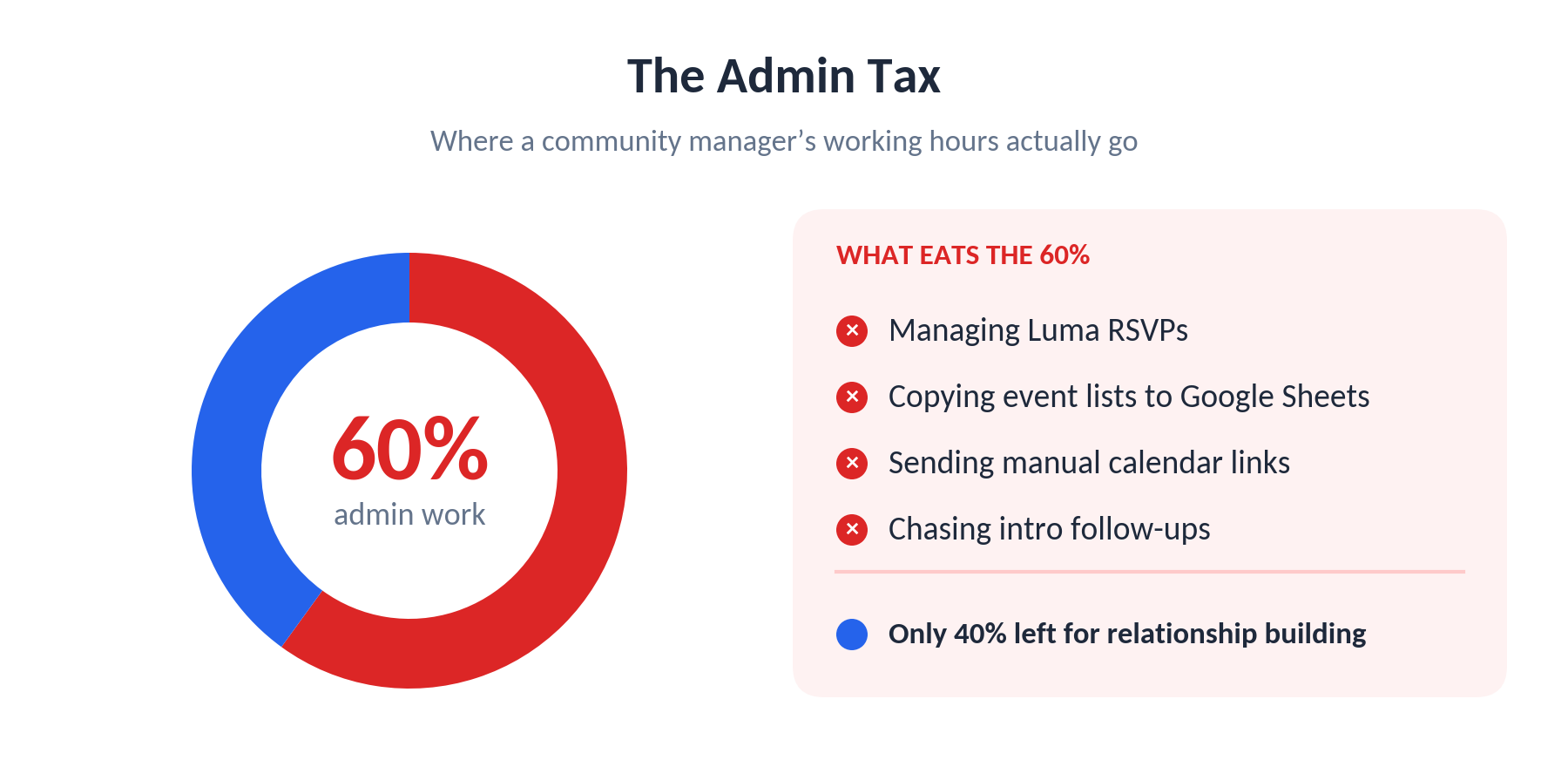
The single biggest point of failure for B2B communities is operational friction, often called the ‘Admin Tax.’ Ecosystem leaders frequently find themselves buried in manual administrative tasks managing Luma RSVPs, copying event lists to Google Sheets, sending manual calendar links, and chasing intro follow-ups.
When community managers spend 60% of their working hours playing administrative air-traffic controller, they run out of bandwidth for actual high-touch relationship building. The ecosystem stalls, response times lag, and momentum drops.
To scale a dark social community without increasing headcount, community leaders need a centralized ecosystem operating platform. This is precisely why platforms like Pinch exist.
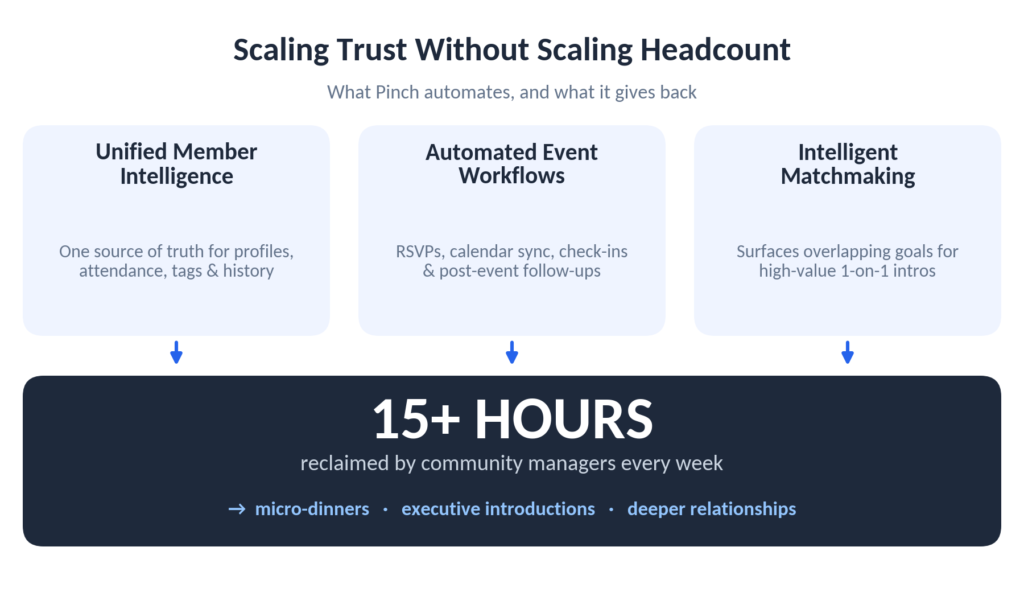
Pinch does not attempt to replace human relationships with artificial AI bots. Instead, it operates as an invisible operational backend that eliminates administrative friction entirely:
By automating the operational engine in the background, community managers reclaim over 15 hours a week—time redirectable toward organizing intimate micro-dinners, facilitating executive introductions, and deepening genuine relationships.
Stop letting manual spreadsheets kill your community momentum. Turn your dark social network into a predictable growth engine with Pinch.