
Managing a community of over 1,000 members is both rewarding and challenging. While it brings vibrancy and growth, it can also lead to burnout if not managed carefully. With the right strategy, structure, and tools such as Pinch you can scale efficiently, maintain community happiness, and preserve your own energy.
In this post, we share a framework to manage large communities, reduce stress, and scale sustainably.
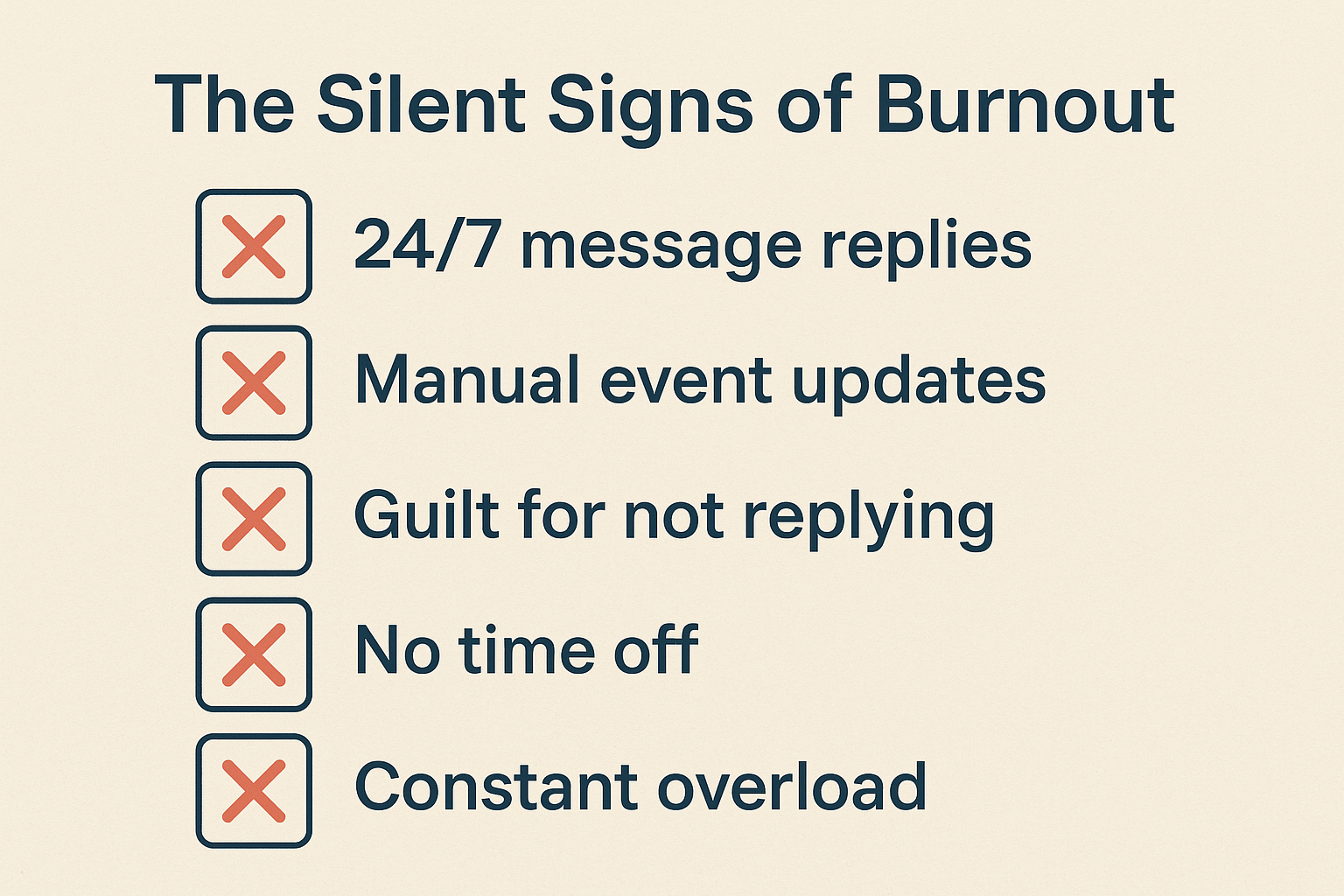
When one person tries to handle everything from messages to events to content it becomes overwhelming:
Constant notifications and messages
Manual event & RSVP management
Pressure to respond quickly and stay “always on”
Treating engagement as an obligation rather than genuine interaction
Left unchecked, these demands turn community building into a chore, not a passion.
If you’re trying to succeed with “Do everything yourself,” you’ll burn out fast. Instead, shift to building systems and roles.
Create clear member-roles such as:
Moderators – to maintain conversation quality
Champions / Ambassadors – to welcome new members and spark discussions
Organisers / Hosts – to manage events, meetups, and community initiatives
By doing this, you become a gardener of the community, not the sole caretaker.
This approach scales far better than solo-management and it builds shared ownership and accountability.
Constantly responding to messages drains energy and focus. Instead:
Designate fixed times for checking/responding (e.g. twice a day)
Schedule announcements and content in advance
Set clear expectations around response times for members
“Admins respond between 11 AM–1 PM & 6 PM–8 PM. Meanwhile, feel free to help each other!”
This reduces stress, fosters peer-to-peer help, and ensures you stay sane.
Related reading: check our post on Best Practices for Community Engagement.
Manual workflows are burnout traps. If a task repeats more than once, automate it:
Onboarding new members
Event registration & RSVP tracking
Automated event reminders
Segmentation and tagging
Feedback collection
With Pinch, you can build a workflow once and let it run forever. This frees you to focus on what matters: building relationships and community experience.
For detailed steps, you can follow our guide: How to Host Events with Pinch.
Large communities often feel chaotic because everyone’s in one place. Instead:
Segment by interest (e.g. Running, Music, Tech, Wellness)
Segment by location (for cities like Bengaluru: Koramangala, HSR, Indiranagar…)
Segment by role or level (newcomers, regulars, organisers)
Smaller micro-communities encourage meaningful interaction, stronger bonds, and better engagement. They’re easier to manage and scale than a monolithic group.
If you’re curious about segmenting strategies, see our article: Why Community Tools Matter for Micro-Communities.
Consistency matters more than spontaneity when managing large communities. Consider:
Welcome Flows for new members
Weekly rhythms: theme days (e.g. Motivational Monday, Feedback Friday)
Monthly events or meetups with predictable cadence
Feedback loops to gather suggestions and iterate
When systems replace guesswork, community engagement becomes sustainable without draining you.
You are the gardener. You don’t need to be everywhere at once. To avoid burnout:
Schedule regular time off
Mute notifications when taking breaks
Rotate moderators/hosts so the load isn’t on you alone
Skip events sometimes let others lead
Trust your systems and community to operate without constant oversight
This isn’t slack. It’s smart leadership.
Pinch was designed for modern community managers who want to scale without stress:
✔ Manage 1,000–5,000+ members easily
✔ Run multiple micro-communities from one dashboard
✔ Automate onboarding, events, reminders, tagging, and feedback
✔ Use AI-powered workflows to minimize manual work
✔ Focus on building meaningful relationships, not admin tasks
Read More Articles here.